How the Address Poisoning Scam Targets Your Crypto Wallet
How often do you double-check crypto addresses before sending and receiving coins? How many times do you use the same address for the same transactions? Just consider this—scammers do it every day.
According to Chainalysis research, crypto address scams have consistently been the most prevalent type of scam since 2024. Regrettably, the situation in 2026 is no better. Scam Sniffer reported that approximately $6.27 million was stolen from 4,741 victims in January 2026, marking a 207% increase compared to December 2025.
Let’s delve into this type of scam and explore strategies to avoid becoming a victim.
What Is an Address Poisoning Scam?

Imagine you regularly send coins to the same address, whether it’s your secondary personal address in another wallet or someone else’s address. You’re accustomed to sending crypto automatically and usually copy the address from the History section.
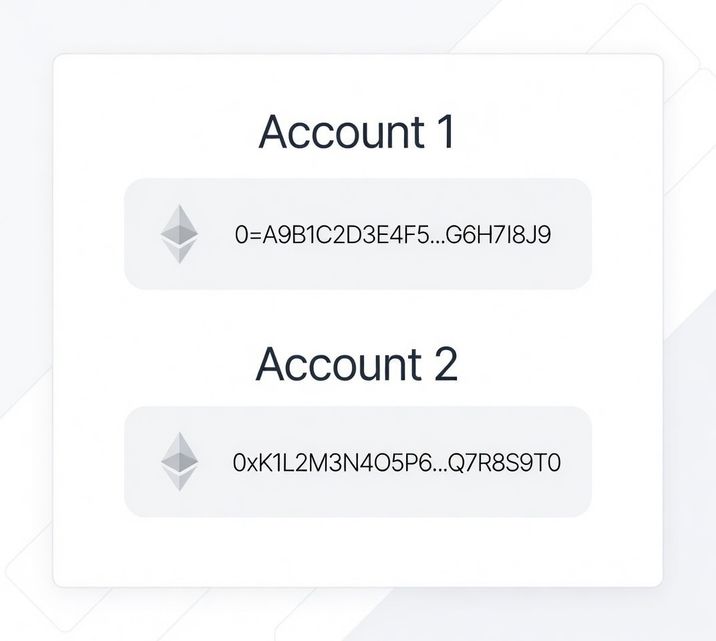
Meanwhile, scammers meticulously analyze blockchain transaction patterns daily, diligently searching for matching addresses. If you consistently send coins to the same address, scammers will catch wind of this pattern, making you an easy target.
- Scammers meticulously craft a lookalike address that closely resembles the victim’s most frequent interaction point. The subtle differences, often just a few symbols, may go unnoticed at first glance.
- Then, they initiate a seemingly innocuous transaction (referred to as a dust transaction) from this newly created address, effectively “poisoning” the target’s address book.
- The scammers patiently await a moment of oversight, hoping the victim will mistakenly send money to the new scam address. If this unfortunate event occurs, your cryptocurrency will be stolen.
In essence, an address poisoning scam is a type of cyber fraud where scammers send coins to a fake cryptocurrency address that “poisons” the victim’s address book by mimicking a legitimate one.
How Do Scammers Generate a Lookalike Address?
Scammers, of course, don’t select existing addresses but instead generate new ones in bulk, incorporating a specific prefix or suffix to visually resemble the victim’s address. While creating absolutely identical addresses is virtually impossible, attackers strategically attempt to match the first or last 2–6 symbols.
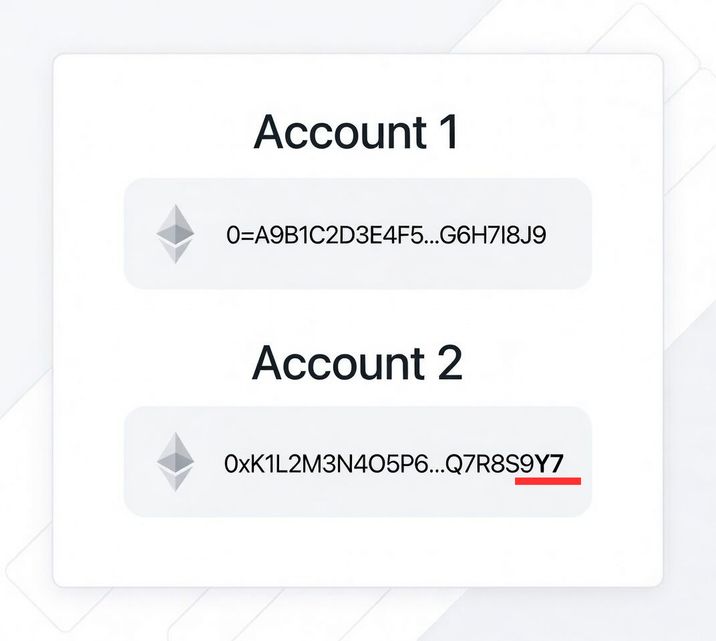
There are numerous services that can generate fake addresses. For instance, Vanitygen and VanitySearch are used for Bitcoin (BTC), while Profanity and Vanity-ETH are used for Ethereum (ETH). However, these utilities are publicly accessible, and scammers often prefer to use custom tools. These tools are frequently based on GPU farming or open-source solutions.
How Can You Protect Yourself?
The core of address poisoning scams is exploiting your inattentiveness.
1. Never Copy an Address From Transaction History
This is the most common mistake. Scammers intentionally create “vanity” addresses so that when you scroll through your wallet history, both addresses appear almost identical at a glance.
Always copy the recipient address directly from the original trusted source, such as the official website, verified contact, or hardware wallet screen.
Never reuse an address from your transaction log without thoroughly verifying it. Additionally, add important addresses to your address book.
2. Verify the Entire Address — Not Just the First and Last Characters
Most users only check the first four and last four symbols. However, this is no longer sufficient. Attackers intentionally create addresses that match those positions.
Best practice:
- Verify at least the first six and last six characters.
- For large transfers, compare the full address side-by-side.
- If possible, paste the address into a text editor and manually scan it before confirming.
If you’re sending five or six figures, spending 10 extra seconds verifying the entire string is not optional—it’s mandatory.
3. Send a Small Test Transaction First
Instead of sending the full balance at once, start with a small amount and confirm that it reaches the intended recipient. Then verify the address on the blockchain and ensure everything matches exactly before moving the remaining funds.
Yes, this approach incurs an additional network fee. However, compared to the irreversible loss of a substantial transfer, that fee is insignificant. Address poisoning scams exploit haste and overconfidence. A two-step transaction process compels you to slow down, significantly reducing the risk of sending funds to a lookalike address.
4. Utilize Hardware Wallet Confirmation Screens
If you employ a hardware wallet, treat its device screen as the ultimate verification point. Malware can manipulate clipboard data, replace copied addresses, or alter what appears in your browser. However, it cannot alter the address displayed on your hardware device itself.
Before confirming any transaction, meticulously compare the recipient address shown on the hardware wallet screen with the intended address from your trusted source. Additionally, verify the network and the amount. Never approve a transaction without directly verifying these details on the device. This extra step is not optional—it serves as the primary defense against address manipulation.
5. Separate Wallets and Limit Address Reuse
To mitigate this risk, categorize your funds by purpose. Use one wallet for long-term storage and another for daily transactions. Avoid publicly disclosing your primary holdings address. Whenever possible, generate fresh receiving addresses instead of relying on the same one repeatedly. Operational separation makes it challenging for attackers to anticipate your behavior and target you effectively.
6. Double-Check Addresses on Blockchain Explorers
Before executing a high-value transfer, take an extra minute to verify the recipient address using a blockchain explorer. Review its transaction history and behavioral pattern. Poisoning addresses often exhibit repetitive dust transfers to multiple unrelated wallets—a clear indicator of automated scam activity.
Read more: Why Crypto Exchanges and Blockchain Explorers Display Different Balances
If the address appears newly created, unusually inactive, or primarily associated with small outbound transfers to random wallets, pause the transaction and re-verify the source. A quick on-chain review can uncover suspicious patterns that are not immediately visible in your wallet interface.